Keep your dog’s ears clean and healthy
Looking after your dog's ears is an important part of their regular grooming and hygiene routine. Over time, wax, dirt, moisture and everyday debris can build up inside the ears, particularly in dogs that love swimming, have floppy ears or are naturally more prone to wax build-up.
Gentle, regular ear cleaning can help keep your dog's ears clean and comfortable while supporting good ear hygiene. Using a product that's specially formulated for pets is the safest way to remove wax and debris without using harsh ingredients or cotton buds.
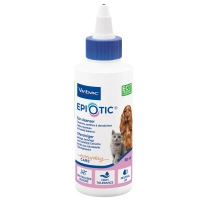
At Virbac, our EpiOtic dog ear cleaner is designed to support routine ear hygiene by helping remove wax, dirt and debris while being gentle on the delicate ear canal.
Read on to learn why ear cleaning is important, how to clean your dog's ears safely, what to avoid and how to choose the right ear cleanser for your dog's routine.
Why regular ear cleaning is part of a healthy grooming routine
Your dog’s ears can collect wax, dirt, moisture and small pieces of debris over time. For some dogs, this build-up may cause discomfort or make their ears feel itchy.
Some dogs may need more regular ear checks than others, especially if they have:
- Floppy ears
- Hairy ear canals
- Heavy ear wax
- Allergies
- Frequent swimming or bathing
- A history of recurring ear problems
Ear care is one part of your dog’s wider dog health and wellbeing routine. However, regular ear cleaning isn’t needed for every dog. Some dogs have naturally clean, comfortable ears and only need occasional checks.
The goal is to support comfort, cleanliness and routine hygiene, rather than to treat disease.
Signs your dog’s ears may need attention
Your dog may need their ears checked if you notice:
- Scratching or rubbing around the ears
- Shaking their head
- Visible wax or debris
- An unpleasant smell
- Redness
- Sensitivity when their ears are touched
- Discharge
- A tilted head or changes in balance
Routine ear cleaning isn’t always enough to deal with these signs. If your dog’s ears only look mildly dirty and your dog seems comfortable, a veterinary ear cleanser may help with regular cleaning.
If there’s pain, swelling, strong smell, discharge or repeated head shaking, speak to your vet before cleaning. Your dog could have an ear infection or an underlying issue such as ear mites, which requires veterinary treatment and will not improve with using an ear cleaner alone.
How do you clean a dog’s ears safely?
Dog ear cleaning should feel calm, gentle and controlled. Try not to rush, and stop if your dog seems uncomfortable.
- Choose a calm moment. Pick a time when your dog is relaxed.
- Prepare what you need. Use a veterinary ear cleanser, cotton pads or gauze, and a clean towel.
- Gently lift the ear flap. This helps you see the opening of the ear.
- Apply the cleanser as directed. Follow the product instructions and avoid inserting anything deep into the ear.
- Massage the base of the ear. Do this gently to help the cleanser move through the ear canal.
- Let your dog shake their head. This helps bring loosened wax and debris towards the outer ear.
- Wipe only the visible area. Use cotton pads or gauze to remove loosened material.
- Reward your dog. Keep the experience positive and stop if they seem distressed.
As with other parts of your dog’s care routine, the key to cleaning your pet’s ears safely is to take things nice and slowly. You may not get much done the first few times you try, but with calm, gentle guidance and plenty of reassurance, your dog should get used to it in time.
What should you use to clean your dog’s ears?
You should use a cleanser specifically formulated for pets to clean your dog’s ears. Veterinary ear cleansers are designed to help remove dog ear wax, dirt and debris while being suitable for the delicate ear area.
Avoid using household or human products, harsh cleansers, alcohol, perfumes or home remedies unless your vet has advised them. These can irritate the ear or make discomfort worse.
A gentle product designed for regular ear hygiene for dogs can help keep the visible ear area clean and fresh. If your dog already has pain, redness, discharge or a strong ear odour, speak to your vet before cleaning.
If you’re looking for a vet-approved ear cleaner for your dog, EpiOtic is designed for routine ear hygiene in both dogs and cats.
Why choose EpiOtic for routine ear hygiene?
Our EpiOtic ear cleaner has been developed for routine ear hygiene in dogs and cats, combining gentle cleansing with technologies that help support a healthy ear environment.
EpiOtic helps remove excess wax, dirt and debris, neutralise unpleasant odours and support clean, comfortable ears as part of your dog's regular care. It's a gentle, pH-neutral ear cleanser with no alcohol or perfume, making it suitable for regular use when appropriate.
EpiOtic contains ingredients and technologies that support its cleansing action:
- Salicylic acid helps loosen excess wax and dead skin cells for easier cleaning, and also functions as a drying agent.
- Glycotechnology helps reduce the adhesion of certain microorganisms.
- Defensin Technology helps support the skin's natural protective barrier.
- Anti-odour – helps neutralise unpleasant ear odours.
Used as directed, EpiOtic provides a gentle, effective way to support routine ear hygiene and help keep your dog's ears clean, comfortable and healthy.
What should you avoid when cleaning your dog’s ears?
Good ear cleaning is also about knowing what not to do. To help keep your dog comfortable:
- Don’t push cotton buds into the ear canal
- Don’t use harsh household products
- Don’t use alcohol or perfumed products unless advised by your vet
- Don’t keep cleaning if your dog shows pain or distress
- Don’t ignore strong smells, swelling, blood or discharge
- Don’t try to remove a suspected foreign body yourself
Cotton buds can push wax and debris deeper into the ear. They can also cause discomfort or injury if used incorrectly. Use cotton pads or gauze only on the visible part of the ear.
What’s the difference between ear cleanser, ear drops and veterinary medicine?
These terms can sound similar, but they don’t always mean the same thing.
An ear cleanser is used for routine hygiene. It helps remove wax, dirt and debris, and can support clean, fresh ears.
Ear drops for dogs can mean different things. Some may be supportive hygiene products, while others may contain medicinal ingredients.
A veterinary medicine is used for diagnosed conditions and should be used under veterinary direction.
If your dog has signs of an ear infection, mites, inflammation, pain or unusual discharge, you should go to your vet. In those cases, choosing a stronger product without a diagnosis may delay the care your dog needs.
When should you contact a vet about your dog’s ears?
Contact your vet if you notice:
- Persistent scratching
- Repeated or forceful head shaking
- Pain when the ear is touched
- Redness or swelling
- A strong or persistent smell
- Dark, abundant or unusual discharge
- Blood
- A tilted head
- Balance problems
- A suspected foreign body, such as a grass seed
Ear problems can have several causes, including infection, parasites, allergies, inflammation or foreign bodies. Ear cleaning can support hygiene, but it doesn’t replace diagnosis or treatment when your dog’s ear is painful, inflamed or infected.
Knowing how to spot things like the signs of otitis in dogs can be helpful, but veterinary advice may still be needed.
How often should you clean your dog’s ears?
How often you should clean your dog’s ears depends on your dog’s needs. There’s no single routine that suits every dog.
Some dogs only need occasional cleaning. Others may need more regular checks, especially if they have floppy ears, swim often, are a working dog, produce heavy wax, have allergies or have had recurring ear problems.
Cleaning too often can irritate the ear, especially if the skin is already sensitive. If you’re unsure, ask your vet how often to clean your dog’s ears and which product is most suitable.
Building ear checks into your dog’s care routine
Regular ear checks can help you notice small changes early. As part of your usual care routine, you can:
- Look for redness, wax, debris or discharge
- Notice any unusual smell
- Watch for scratching or head shaking
- Handle your dog’s ears gently
- Reward your dog after checks
- Help your dog get used to ear handling before cleaning is needed
Taking dog care advice and introducing simple habits like these can make ear care less stressful for both of you.
Support cleaner, more comfortable ears with EpiOtic
Ear cleaning can help support comfort and hygiene when it’s done gently, correctly and at the right time. The right dog ear cleanser is important, especially for a sensitive area like the ear.
If your dog’s ears appear inflamed, are painful, swollen, smelly or producing discharge, ask your vet before cleaning. For routine ear hygiene, choose our EpiOtic dog ear cleaner to support gentle, regular ear cleaning for your pet.
FAQs about dog ear cleaning
How do you clean a dog’s ears safely?
Use a pet ear cleanser, follow the product instructions and avoid inserting anything deep into the ear. Gently massage the base of the ear, let your dog shake their head, then wipe only the visible area with cotton pads or gauze.
How often should you clean your dog’s ears?
It depends on your dog. Some dogs only need occasional cleaning, while others need more regular ear checks because of ear shape, swimming, wax build-up, allergies or recurring irritation. Your vet can advise the right routine.
Can you use cotton buds to clean a dog’s ears?
You shouldn’t push cotton buds into your dog’s ear canal. They can push wax or debris deeper and may cause discomfort. Use cotton pads or gauze to clean only the visible part of the ear.
Why do my dog’s ears smell?
Smelly dog ears can be linked to wax, debris or moisture. They can also be a sign of irritation, inflammation or infection. If the smell is strong, persistent or comes with redness, pain or discharge, contact your vet.
What is the difference between an ear cleanser, ear drops and veterinary medicine?
An ear cleanser is for routine hygiene and helps remove wax, dirt and debris. Ear drops can be supportive or medicinal, depending on the product. Veterinary medicine is used for diagnosed conditions and should be used under veterinary direction.
When should you contact a vet about your dog’s ears?
Contact your vet if your dog has pain, redness, swelling, discharge, blood, head tilt, balance problems, persistent scratching or strong head shaking. These signs may need diagnosis and treatment rather than routine ear cleaning alone.